
ST Engineering: Over 500 jobs to be offered in Singapore as new SG aircraft maintenance facility opens

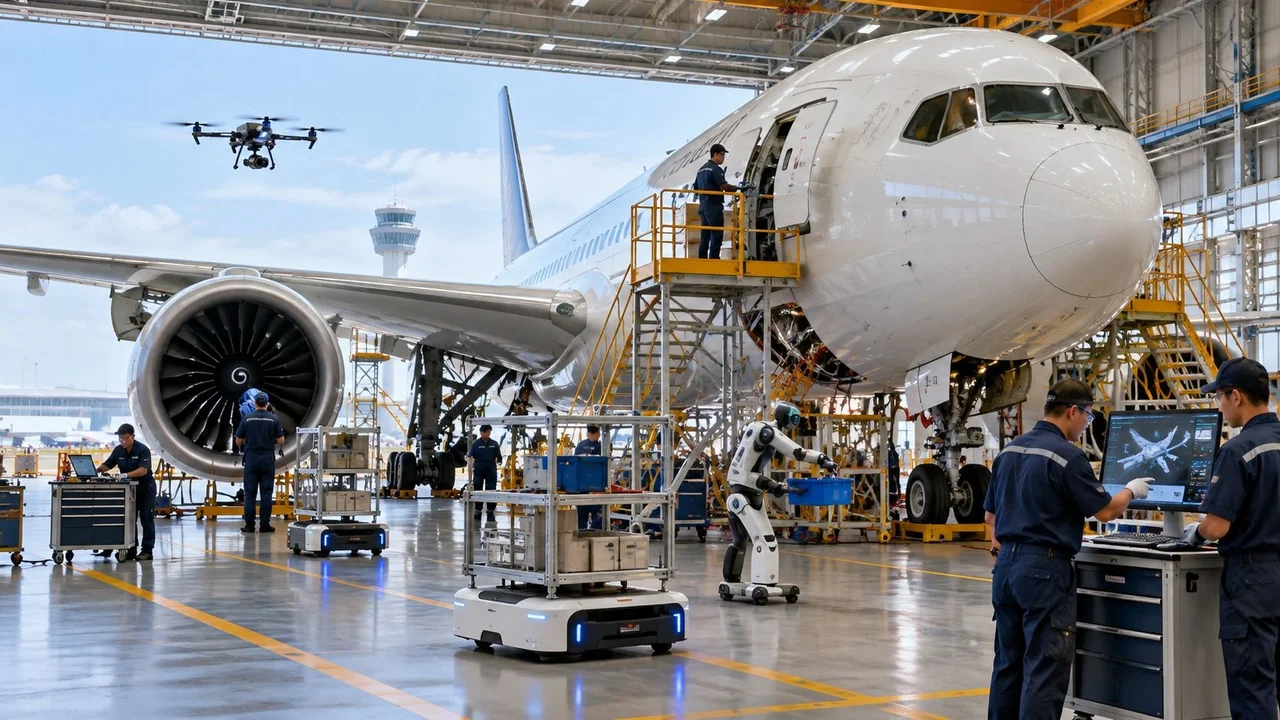
ST Engineering aircraft maintenance facility in Singapore
Summary
ST Engineering opened its fourth aircraft maintenance facility in Singapore on Oct 9, with over 500 jobs planned.
The S$170 million Changi Creek site adds 40% capacity to the company’s Singapore-widebody aircraft maintenance network.
Drones, artificial intelligence (AI) and robots will support inspections and parts delivery, with the company targeting a 25% productivity gain.
SINGAPORE: ST Engineering’s new aircraft maintenance facility at Changi Creek is bringing more than extra hangar space to Singapore.
The S$170 million investment will create over 500 jobs when fully operational and introduce technology designed to make aircraft repairs faster and safer.
The facility officially opened on Oct 9 and began operations in May. Most of the planned positions are newly created, covering licensed aircraft engineers, mechanics, production planners, warehouse staff and logistics workers.
Channel NewsAsia (CNA) reported the opening on Oct 9, as Singapore prepares for future air traffic growth and develops Changi Airport Terminal 5.
Over 500 jobs across Singapore’s aerospace sector
The 84,000 sq m facility is ST Engineering’s fourth aircraft maintenance site in Singapore and its second-largest aerospace facility locally. It has four bays for widebody aircraft, which are larger planes used on many long-haul routes.
Deputy Prime Minister Gan Kim Yong, who is also Minister for Trade and Industry, said the investment comes at a suitable time, given expected air traffic growth across the Asia-Pacific region.
The minister also urged ST Engineering to help more Singaporeans build skills and pursue long-term careers in aerospace.
The benefits of a major investment extend beyond the company itself. New roles can support workers, suppliers and other firms within Singapore’s aerospace sector.
Drones and AI aim to make aircraft checks safer
The new site adds 40% capacity to ST Engineering’s Singapore-widebody aircraft maintenance, repair and overhaul network. This could allow the company to service up to 100 more widebody aircraft each year.
Technology is another important part of the investment. Drones will inspect aircraft surfaces from above, reducing the need for technicians to use scaffolding or lifts for certain checks.
Artificial intelligence models can help detect corrosion, paint defects and dents. A camera mounted on a robotic arm can inspect landing gear, cutting inspection time by up to 83%.
ST Engineering aims to raise productivity at the facility by 25% over the long term. These tools could help workers spend less time on routine tasks and more time on work that needs their skills.
Robots will move parts and supplies around the hangar
The facility will also use robots to move tools, aircraft parts and materials between storage areas and the hangar floor.
Humanoid robots will retrieve items for maintenance jobs and pass them to autonomous mobile robots for delivery. Larger automated vehicles can carry heavier loads of up to 500kg.
ST Engineering expects these systems to save about 7,800 manhours annually by reducing manual handling.
The company is also using 3D-printed aircraft parts to help customers avoid long waits for certain components. Faster access to parts can matter when airlines need planes back in service within tight timeframes.
Newsletter
Get updates straight to your inbox
Singapore could become a testing ground for global operations
ST Engineering President of Commercial Aerospace Kevin Chow said the investment reflects the company’s confidence in Singapore as an air hub. He added that the company hopes to expand proven technologies to overseas facilities within one to two years.
The new facility therefore has two jobs: to maintain more aircraft and to test ways to improve the work itself.
Technology can speed up inspections and move supplies, but skilled people will still be needed to assess faults and carry out repairs.
With over 500 jobs planned, the practical test will be whether ST Engineering can use these tools to build a more productive operation while helping local workers develop lasting skills.
For Singapore, that would be a stronger outcome than just having a bigger hangar.