
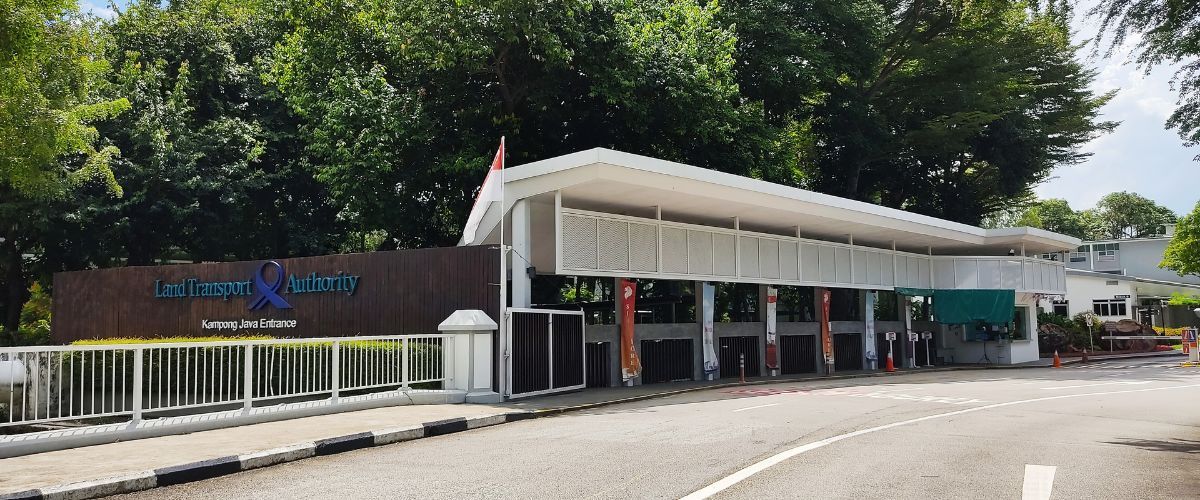
Photo: LTA Kampong Java Entrance
Singapore’s North-South Corridor delayed by two years after underground construction challenges

SINGAPORE: The Land Transport Authority has announced an approximately two-year delay to the North-South Corridor, citing a combination of challenging ground conditions, complex excavation requirements, and the technical demands of working in close proximity to live MRT infrastructure and major roads.
The 21.5 km corridor’s viaduct section from Admiralty Road West to Lentor Avenue is now expected to open in phases from 2029 instead of 2027, while the tunnel section from Lentor Avenue to the East Coast Parkway will open in phases from 2031 instead of 2029.
As of August 2026, more than 90% of viaduct foundation works and more than 90% of tunnel foundation works have been completed, with construction progressing to above-ground structures and major excavation works ongoing across the 12.3 km tunnel alignment.
What caused the delays
LTA detailed three specific site challenges that contributed to the cumulative delay.
At Gambas Avenue and Woodlands Avenue 8, harder and higher rock formations than anticipated required significantly more time to complete the piles underpinning the viaduct, delaying the progression to above-ground work.
At Novena, the NSC tunnel passes both above and below the operational North-South Line with clearances as close as one metre. Fractured rock and groundwater inflows beneath the live NSL tunnel forced LTA to abandon direct tunnelling in favour of a more precise and time-intensive method of excavating in smaller sections, continuously removing rock, grouting, and adding supports to advance work without causing soil movement or settlement that could have affected live MRT operations and traffic above.
At Thomson, harder-than-expected rock formations and highly variable ground conditions required extensive controlled rock blasting, additional rock removal, and ground stabilisation before excavation could safely proceed. Construction methodology and earth-retaining systems also had to be revised.
LTA said the full extent of the delays and their knock-on effects only became clear as works progressed and actual ground conditions were established; a sequence-dependent project means delays at critical work fronts compound across subsequent activities.
What improves before the NSC opens
Despite the revised opening timeline, LTA said travel conditions along the corridor will improve progressively ahead of the NSC's completion. From 2027, more construction activities will move underground, reducing surface-level disruption. From 2028, roads, footpaths, and adjacent areas currently occupied by construction will be progressively reinstated for public use.
Newsletter
Get updates straight to your inbox
LTA acknowledged the prolonged impact on residents, businesses, motorists, and commuters along the corridor and said it would continue to deploy additional manpower and equipment, optimise construction sequences, and prioritise critical activities to make up time where feasible.
What the NSC will deliver
When complete, the NSC will serve towns including Sembawang, Yishun, Ang Mo Kio, Toa Payoh, Novena, and Rochor, relieving congestion along the CTE and major arterial roads including Thomson and Marymount Roads, while providing links to the SLE, PIE, and ECP.
With traffic channelled to the NSC, surface streets along the corridor will be progressively repurposed to give more priority to walking, cycling, public transport, and community spaces.