
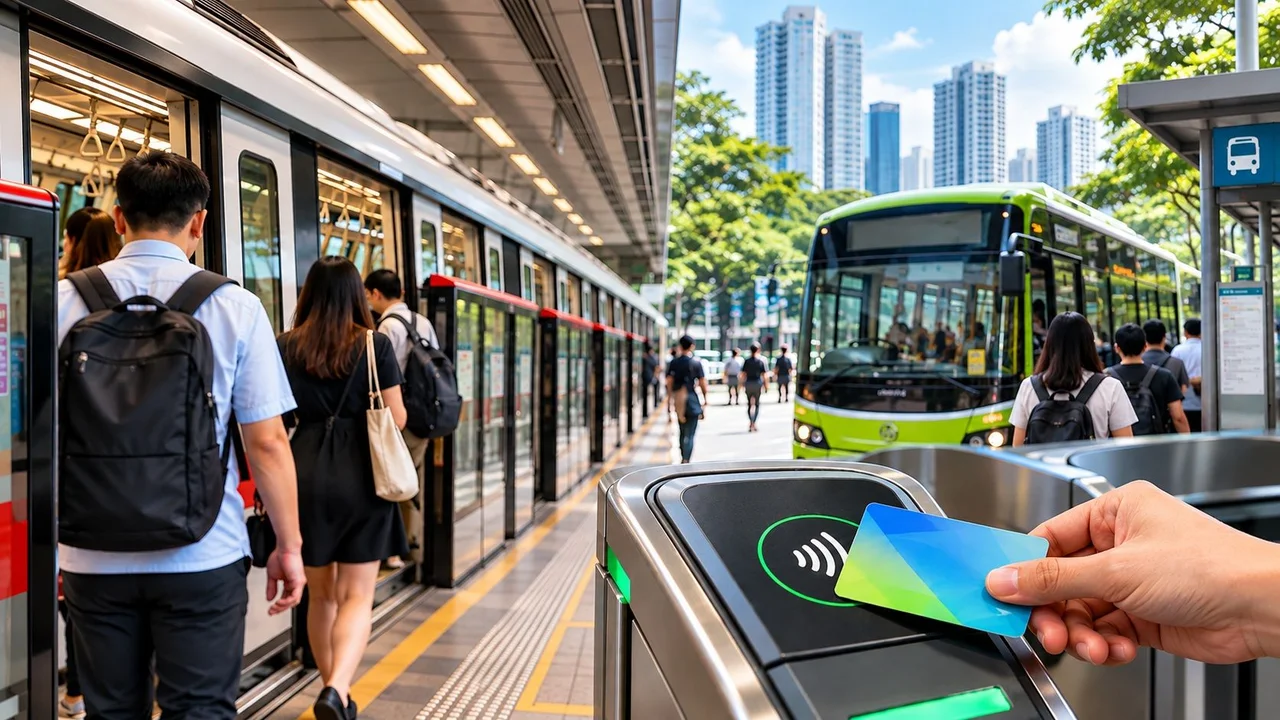
Modern Singapore Transit Interchange
PTC: Public transport fares in SG to rise by 12 to 13 cents per trip for adult card users

Summary
Adult card fares will rise by 12 to 13 cents per journey from Dec 26, while concession fares increase by 5 cents.
The Public Transport Council approved a 7% overall fare increase, below the maximum allowable adjustment of 14.7%.
Public Transport Vouchers will rise from S$60 to S$80, with more households becoming eligible under the revised income ceiling.
SINGAPORE: Public transport fares in Singapore will rise from Dec 26, with adult card users paying 12 to 13 cents more per journey.
The Public Transport Council (PTC) approved a 7% overall increase for the 2026 Fare Review Exercise. The increase is less than half of the maximum 14.7% adjustment allowed under the fare formula.
Adult commuters travelling up to 3.2 km will pay 12 cents more per trip. Longer journeys will cost 13 cents more. Concession cardholders, including students, seniors and people with disabilities, will pay 5 cents more, the PTC announced (Sep 29).
Energy costs pushed up the fare formula
The fare formula resulted in a 5.3% adjustment this year. The figure was driven largely by higher energy prices between July 2025 and June 2026, which the PTC linked to the conflict in the Middle East.
A further 9.4 percentage points had been carried forward from earlier exercises. This brought the maximum allowable adjustment to 14.7%. The council chose to apply only 7%, leaving 7.7 percentage points deferred to future reviews.
The Government will provide close to S$200 million in additional subsidies in 2027 to cover the deferred amount. This comes on top of more than S$2 billion in annual operating subsidies and average annual capital spending of S$5 billion over the next five years.
Public transport operators will also contribute. SBS Transit Rail and SMRT Trains must put 30% of their expected additional fare revenue, totalling S$23.94 million, into the Public Transport Fund.
Monthly passes stay unchanged as fares rise
There is some relief for people who rely heavily on public transport.
Monthly pass prices will stay unchanged. About 126,000 commuters currently use them, while the PTC estimates another 110,000 card users could benefit from switching to a monthly hybrid pass.
Those who qualify could save an average of about S$26 a month compared with paying individual card fares. The number of monthly pass users has more than doubled from 56,000 in 2023 to 126,000 this year.
Commuters can also check their monthly transport spending through the SimplyGo app before deciding whether a pass makes financial sense.
Lower-income households get bigger transport vouchers
Lower-wage workers under the Workfare Transport Concession Scheme will be shielded from the increase. About 190,000 cardholders will see no change in their fares.
Public Transport Vouchers will also increase from S$60 to S$80 per eligible household.
Newsletter
Get updates straight to your inbox
The monthly household income per person ceiling will rise from S$1,800 to S$2,100. About four in 10 households are expected to qualify, including around 60,000 additional households.
The vouchers can be used to top up fare cards or buy monthly passes. Eligible households can receive them in stages, with vouchers valid until March 31, 2028.
Keeping fares manageable while funding the system
PTC Chairperson Janet Ang said the council had to balance fare affordability with the cost of maintaining a reliable public transport system.
The PTC said lower-income households have spent about 2.4% of household income on public transport over the past decade. The figure for average-income households has stayed at 1.7%.
The decision leaves commuters paying more, but the increase is cushioned through subsidies, unchanged monthly passes and stronger support for lower-income households.
For anyone watching their monthly expenses, checking actual transport spending before choosing between card fares and a pass is a sensible place to start. Small changes per trip can add up, especially for regular commuters.