
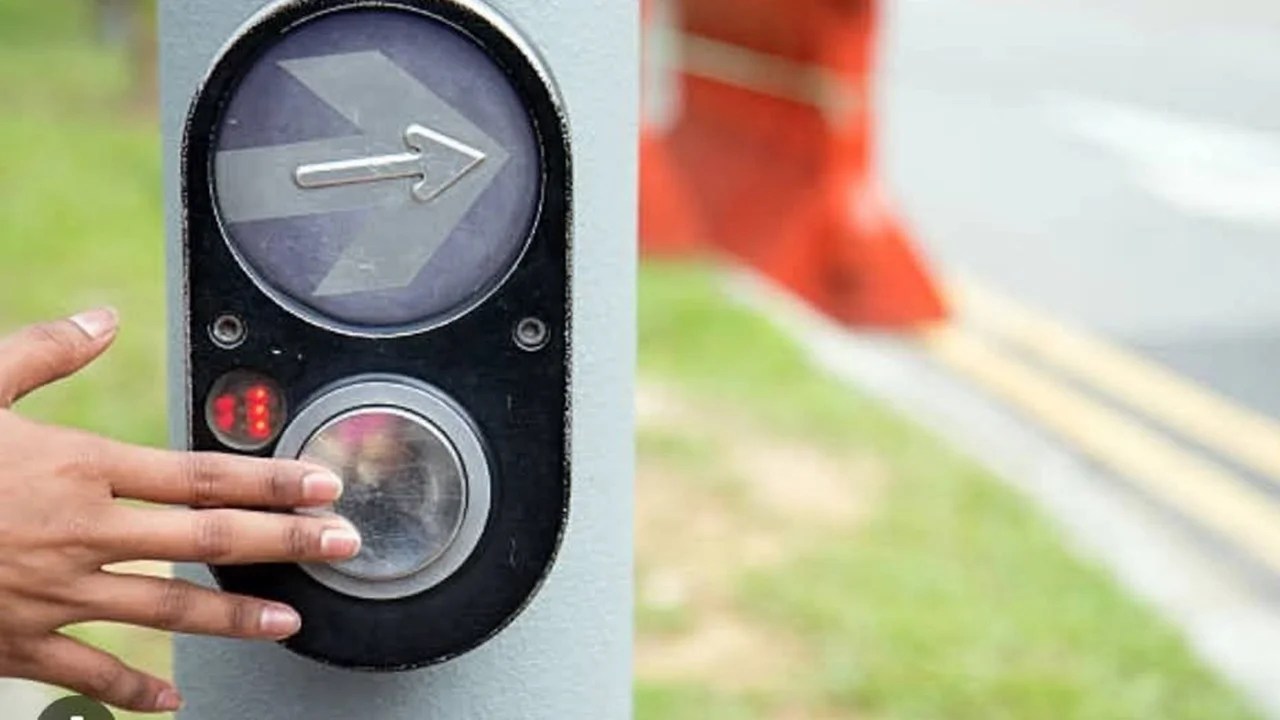
‘I press this button for pedestrians, but it doesn’t change to green man immediately’ — Man complains about traffic lights in SG, gets schooled by Singaporeans
‘I press this button for pedestrians, but it doesn’t change to green man immediately’ — Man complains about traffic lights in SG, gets schooled by Singaporeans

Summary
A man in Singapore complained that pedestrian crossing buttons can require waits of about three minutes at some junctions.
Singaporeans explained that pressing the button doesn’t usually trigger an immediate green pedestrian signal.
Several commenters said the system balances pedestrian crossings with traffic flow rather than changing signals after every button press.
SINGAPORE: One man’s frustration with waiting at pedestrian crossings lit up a discussion among commenters about how Singapore’s traffic signals manage pedestrians and vehicles.
In a Facebook group post on Sept 23, the man said some crossings can take about three minutes to change after the button is pressed.
“I press this button, but it does not change immediately to the green man for pedestrians,” he complained, adding, “Some junctions such as Balestier Road in front of Zhongshan Mall, upon pressing, need to wait at least 3 minutes (approximate).”
The man further wrote that “Need to change to green man at once upon pressing for all pedestrian crossings,” he exclaimed, and concluded that “If not, pressing the button is meaningless.”
The post was shared in the Facebook group Complaint Singapore, where commenters pointed out that pedestrian buttons don’t generally work like an instant switch.
Crossing button signals a request to cross, not a command for vehicles to stop
One commenter explained that the call-to-cross button is linked to the traffic signal system and doesn’t mean an immediate green pedestrian signal.
According to the commenter, the timing can depend on the traffic signal cycle and traffic conditions detected on the road.
Another commenter said the button signals to the system that someone wants to cross, allowing pedestrians to receive a crossing phase in the next suitable cycle.
The commenter also suggested raising concerns through the OneService app if a crossing appears to take too long.
Some agreed pedestrians should get more priority
Not everyone dismissed the man’s complaint entirely, though. One commenter felt the pedestrian crossing button response should be faster, but noted that an immediate change was unrealistic.
“It needs to be quicker with stronger and proper focus on prioritising pedestrians, but I think ‘immediate’ is too much to ask for or expect,” the commenter wrote.
Others noted that different pedestrian crossing buttons can operate under different signal rules.
One commenter explained that switching the lights on and off whenever someone presses the button could repeatedly interrupt traffic and hold vehicles up.
Newsletter
Get updates straight to your inbox
Waiting can feel longer than it really is
The discussion highlights a point about Singapore’s traffic lights: pressing the button is a request, not a command.
The system still has to coordinate vehicles and pedestrians moving through the same junction. This process can make a wait feel frustrating, especially when someone expects the green pedestrian signal to appear straight away.
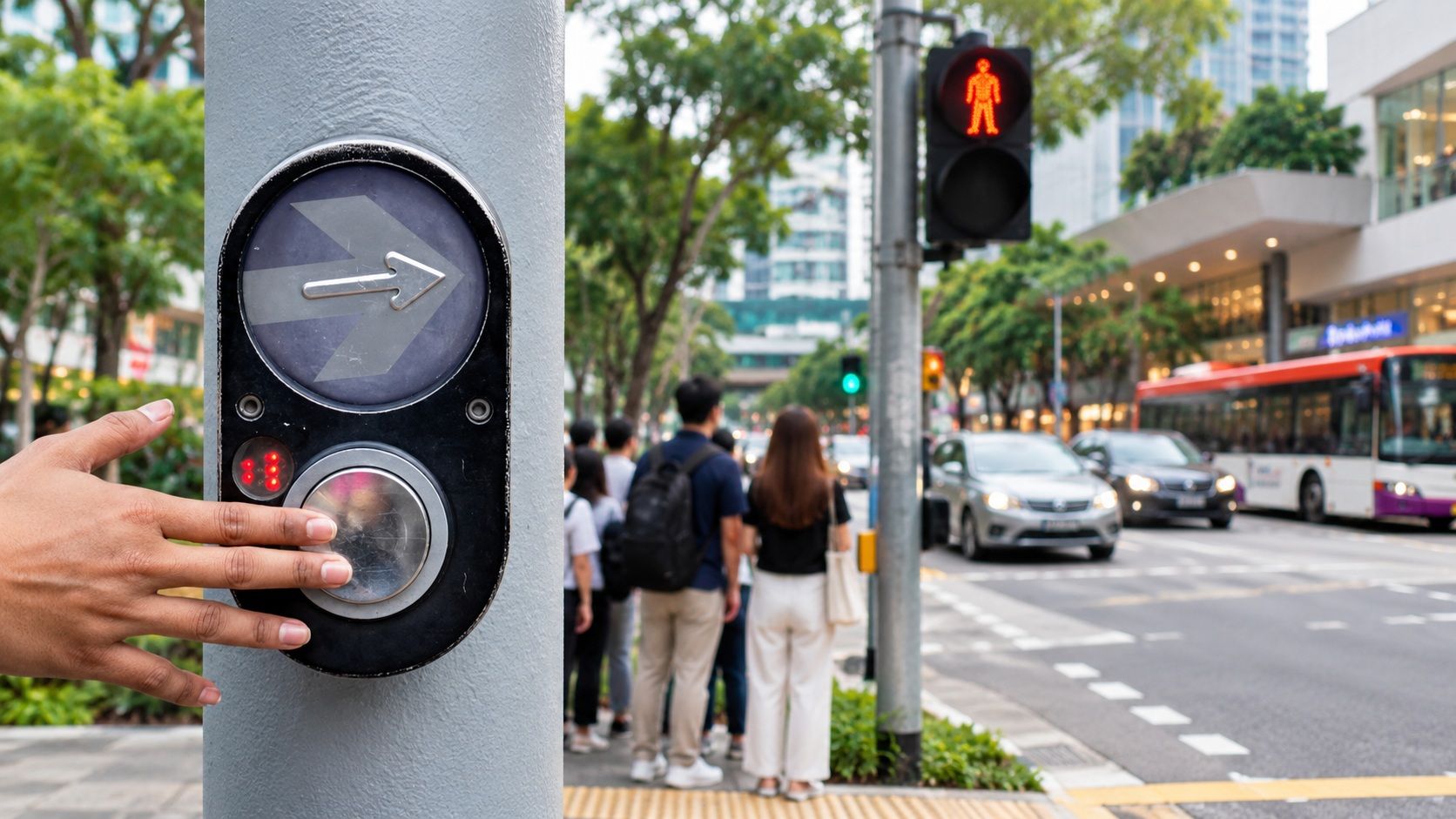
Still, the comments offer a useful reminder that traffic signals have to balance competing movements. A few extra seconds may be annoying, but the button itself is there to tell the system that someone is waiting.
Sometimes, knowing how something works is enough to make the wait a little less mysterious.
Some original quotes have been minimally edited for brevity and clarity