
After report of Singaporeans’ higher salt & calorie intake, netizens share ways to do better with Health Minister Ong Ye Kung
SINGAPORE: Over the weekend, the Ministry of Health (MOH) and Health Promotion Board (HPB) published findings from the National Nutrition Survey and the National Population Health Survey, which showed good news and bad news.
The good news is that Singaporeans are consuming less sugar, from 60g a day in 2018 to 48g a day in 2025. The drop in sugar intake came after Nutri-Grade labelling and advertising prohibition measures for beverages. Also, the number of residents who get enough total physical activity increased from 84.7% in 2024 to 87.3% in 2025.
However, “rising calorie, fat and sodium intake are a concern,” said the HPB.
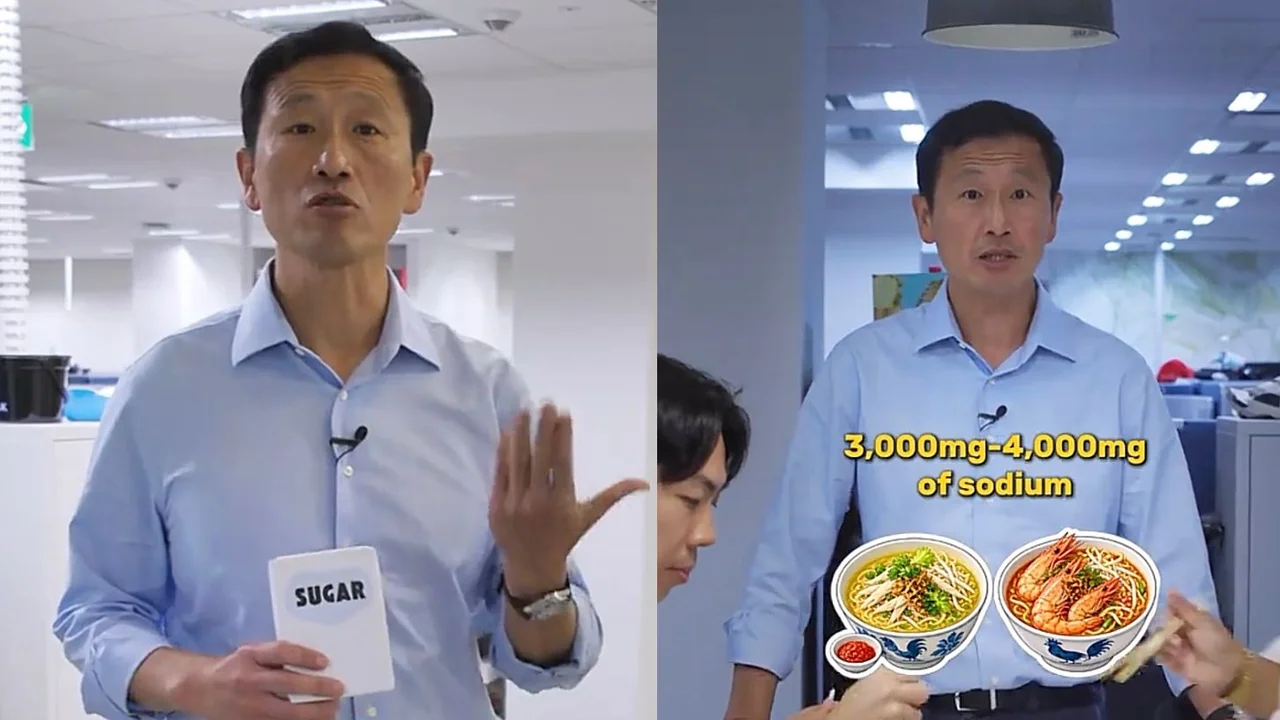
The mean daily calorie intake increased from 2,360 calories in 2019 to 2,460 calories in 2025, and the average daily sodium intake of the population rose from 3,480 mg in 2019 to 4,000 mg in 2025.
Interestingly, more residents are eating out and more often, which the HPB pointed out is associated with poorer diets. While 6 in 10 residents ate out once a day in 2019, in 2025, this figure rose to 7 in 10. In 2019, residents ate out eight times a week, while last year, they ate out nine times weekly.
“Those who eat out most frequently (two or more times per day) have higher calorie, saturated fat and sodium intake than those who eat out least frequently (six times or less per week),” the statement from HPB added.
In a video on Oct 3, Health Minister Ong Ye Kung told Singaporeans, “Small changes add up, so make healthier choices one meal at a time, starting today!”
Commenters on social media suggested that something can be done to make meals served outside one’s home healthier, given that eating out has become part of everyday life for many in Singapore.
“The hawkers should be educated to change their preparation. Are we expected to eat at home for all meals?” a netizen wrote on Mr Ong’s Facebook page.
“Most hawker stalls do not provide the option of more veggies or charge at ridiculous prices…. Hope that there is a way to address this,” wrote another.
Newsletter
Get updates straight to your inbox
Others suggested that since Nutri-Grade labelling appears to have worked in helping lessen sugar intake, perhaps the same can be done for ultra-processed food, so that people can avoid excess salt.
“Many elderly are picking up wrong choices,” one wrote.
Another suggested that he hoped “more be done to encourage truly nutrient-dense food. Businesses that provide such should be given some kind of incentives: for example, instead of Gardenia or processed bread, businesses that truly bake real bread should be encouraged… and good nutritious food should be made affordable. The focus should be on real food.” /TISG
Read also: Healthier to drink Coke than 100plus or Milo? — Nutri-Grade system shocks TikToker