
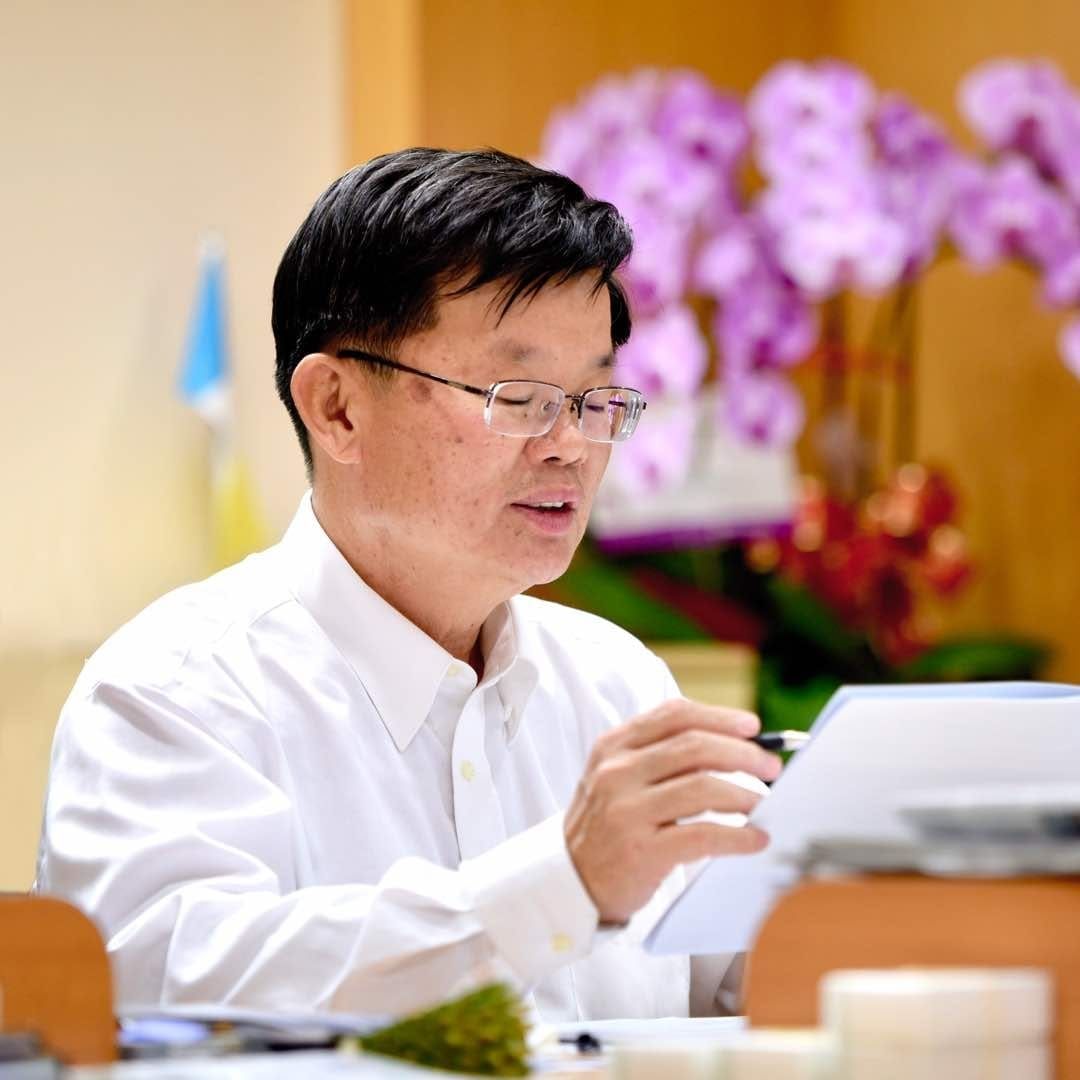
Penang's CM Chow Kon Yeow
Penang’s steady growth puts it among Malaysia’s top industrial hubs
The Democratic Action Party (DAP)'s Chief Minister in Penang, Chow Kon Yeow, said the state has made great strides in the international semiconductor field by building on its existing foundation and keeping up with global trends.
Penang is the only state in Peninsular Malaysia headed by a non-Malay. With the DAP in control, the state's economy has been revitalised through a shift toward high-value manufacturing (semiconductors, E&E) and services.
Following a political change in 2008, the year DAP won the state elections, Penang adopted business-friendly policies, attracting high foreign investment.
It sustained an average growth of over 5%. By 2024–2025, Penang solidified its role as a global tech hub and a top exporter, achieving a leading GDP per capita in Malaysia.
Even in the face of the impact of the new US tariff policy, the state was still able to maintain stable growth and attract investment.
But for the Chief Minister, the party's greatest achievement for Malaysia's political system is the current two-party system.
The country now has a coalition in power with the Pakatan Harapan -of which DAP is a member- in power, and they are in alliance with the former ruling party, Barisan Nasional, alongside the winners from the Borneo states of Sabah and Sarawak.
There is a coalition in the opposition with the Perikatan Nasional (PN), which ruled the country from 2020 to 2022. The Islamists from PAS is the main ally in PN with former PM Muhyiddin Yassin's Bersatu as the other ally.
According to Chow DAP, through its founding generation of leaders, it helped the country to realise that no one party is the undisputed champion.
"DAP facilitated the two-party system of checks and balances in Malaysia, which is a major democratic process," he says.
He says now in Malaysia, no political party can consider itself the ruling party before or after a general election.
The party is celebrating its 60th anniversary this year, and for Chow, it is the reforms brought in Penang in particular that are also of great importance.
"The Penang Chief Minister's (two) term limit was also achieved, and allowing governance to flourish after the change of parties is honourable," said Chow.
PH, with DAP at the helm, governed Penang for 18 years and has left the impression the coalition has given the people in Penang as a state government that puts the people first and takes care of them.
"We have taken good care of the most basic living needs, such as water and electricity supply, urban services and management, garbage disposal, city appearance management and environmental protection, and other livelihood issues, to meet the needs of the people."
Newsletter
Get updates straight to your inbox
The state promotes itself as a liveable city, actively pushing for large-scale infrastructure projects in recent years, such as the long-awaited Mutiara light rail transit (LRT) system and Silicon Valley Island reclamation project.
"After the unity government came to power (in 2022), the Penang LRT was finally approved, and construction is underway."
Chow Kon Yeow also said that Penang's young new voters are the direct beneficiaries of PH governance, and they may have already felt the effects of Penang's changes during their secondary school years.
Penang's policies target young people, including institutionalised funding for schools of all streams, various green and environmental protection projects, the "Science, Technology, Engineering and Mathematics" agenda, and youth volunteer programs.